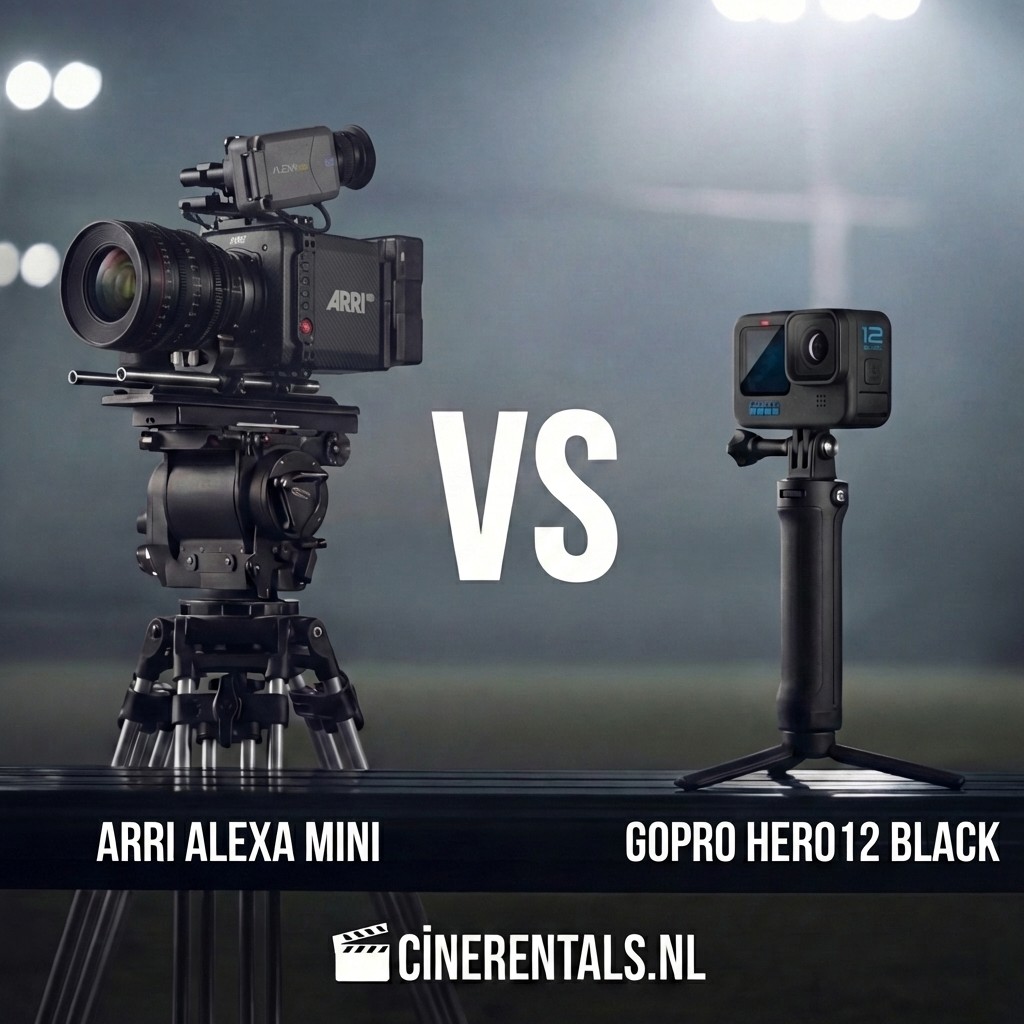
GoPro and Arri sit at opposite ends of the camera spectrum. GoPro is the entry point — accessible, durable and simple enough for anyone to use. Arri is the summit — the camera of choice for Oscar-nominated cinematographers and the most demanding productions in the industry. Between them lies most of the camera market.
Comparing the two might seem like comparing a bicycle to a Formula One car. But many creators and filmmakers genuinely ask themselves when to move from accessible action cameras toward professional cinema systems. This article explains what separates them, who each is built for, and what a realistic upgrade path looks like.
GoPro: Making Video Accessible for Everyone
The GoPro Hero 13 Black weighs 154g, is waterproof to 10 metres without a housing, shoots 5.3K video and stabilises it with HyperSmooth 7.0. For snowboarding, surfing, climbing, motorsport, and any activity where the camera has to survive physical punishment, nothing on the market comes close at this price point.
GoPro democratised action video. Before the Hero series, capturing immersive first-person footage of extreme sports required specialised equipment and significant expertise. GoPro reduced that to a single button. The ripple effect on adventure sports content, travel vlogging and creative filmmaking has been enormous.
Arri ALEXA: Cinema at Its Most Demanding
Arri ALEXA cameras are designed for one purpose: producing the best possible image for narrative film and prestige television. The ALEXA 35 offers 17 stops of dynamic range, ARRIRAW recording, and a colour science refined over decades to produce images that colourists, directors and audiences associate with serious cinema.
Arri systems require a full camera department to operate. A focus puller, an AC, a DIT and an experienced cinematographer are the baseline. The cameras themselves cost hundreds of thousands of euros to purchase; a daily hire rate reflects the level of production they are designed for. That is not a flaw — it is part of what they are.
The Gap in Image Quality
The difference between GoPro and Arri is substantial on every technical measure: dynamic range (GoPro: approximately 11-12 stops; Arri ALEXA 35: 17 stops), sensor size (GoPro: 1/1.9-inch; Arri: large format), colour depth, noise performance in low light, and the available latitude for post-production grading.
In good outdoor light, GoPro footage is sharp, colourful and perfectly suitable for online distribution and broadcast. On a large cinema screen or in a high-end colour suite, the difference from Arri material is immediately apparent.
Where GoPro Cannot Be Replaced
There are shots that only a GoPro can make. Surfboard mount in breaking surf. Helmet camera on a downhill ski run. Inside a rally car door panel. Attached to a wing suit at altitude. Arri cameras do not go there. For action sequences, nature documentaries, extreme sports coverage and any context where the camera faces physical danger, GoPro is the tool.
When the Step Toward Arri Is Right
The step toward Arri makes sense when: you are producing for international festival submission or cinema release; you are working with a professional colourist who can extract what Arri material offers; your production budget can accommodate a higher rental rate; or a broadcaster or distributor specifically requires cinema-camera specifications.
For many filmmakers, the path runs: GoPro for early projects, then Sony FX3 or Canon C70 for professional narrative work, then Arri for the production that demands it. Renting at each stage — rather than buying — keeps the decision reversible. Browse available cinema cameras at Cinerentals to see what each level costs per day.
Renting GoPro and Arri at Cinerentals
Cinerentals stocks both GoPro Hero 13 Black and Arri ALEXA systems for hire. Whether you need an action camera for a weekend adventure or a cinema camera for a feature production, daily and weekly rates are available with delivery across the Netherlands.
Conclusion
GoPro is for creators who need durability, compactness and ease of use in demanding physical environments. Arri is for productions where the image itself is the primary artistic consideration. Most creators start with accessible tools and move toward cinema systems as their productions grow. Renting at each stage is the most practical way to make that transition.
Frequently Asked Questions
Does Netflix accept GoPro footage for original content?
Netflix accepts GoPro footage for inserts, B-camera use and action sequences in productions where it serves a specific creative purpose. As a primary camera for scripted originals, Arri, Sony and RED are the standard systems.
Can GoPro footage be graded like cinema camera footage?
GoPro offers a flat colour profile (Protune) that provides some grading latitude. It does not offer the dynamic range or colour depth of Arri log formats. Heavy grading of GoPro footage will reveal its limitations faster than cinema camera material.
What is a realistic step between GoPro and Arri?
The Sony FX3 or Canon EOS C70 are logical intermediate steps: professional image quality, manageable rental cost, cinema-grade output without the full production infrastructure that Arri requires. Both are available at Cinerentals.nl.
How much does it cost to rent an Arri camera in the Netherlands?
Arri rental pricing varies by model and duration. Check current daily and weekly rates for all Arri systems at Cinerentals.nl.